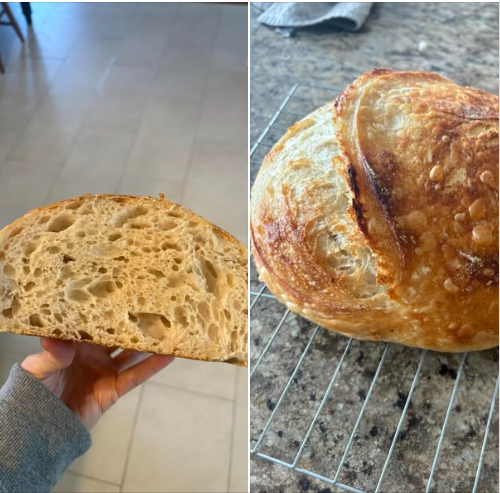
Making sourdough bread from scratch is so rewarding, though it does take a bit of patience! The key to perfect sourdough is having a well-maintained starter. If you already have a sourdough starter ready to go, you’re in for a treat. Here’s a classic recipe for making Sourdough Bread:
Classic Sourdough Bread Recipe
Ingredients:
-
For the starter:
- ½ cup (120g) active sourdough starter (fed and bubbly)
- ½ cup (120ml) warm water
- 1 cup (120g) all-purpose flour (or bread flour)
-
For the dough:
- 1 ½ cups (360ml) warm water
- 1 ½ cups (180g) whole wheat flour (optional, for flavor)
- 3 cups (360g) all-purpose flour (or bread flour)
- 1 ½ teaspoons salt
- 1 tablespoon honey or sugar (optional, for a slight sweetness)
- 1 cup (240g) active sourdough starter (fed and bubbly)
Instructions:
1. Feed Your Sourdough Starter (if needed):
- If your starter hasn’t been fed recently, make sure to feed it about 4-8 hours before you start baking. Mix equal parts water and flour (e.g., ½ cup water and ½ cup flour), stir, and let it sit until it’s bubbly and active.
2. Prepare the Dough:
- In a large mixing bowl, combine the warm water, whole wheat flour (if using), and about 1 cup of all-purpose flour. Stir to combine.
- Add in your active sourdough starter and mix well.
- Gradually add the remaining all-purpose flour, 1 cup at a time, stirring between each addition. Keep mixing until the dough comes together and is somewhat sticky.
- Add the salt and honey (if using) and knead the dough on a lightly floured surface for about 8-10 minutes until it’s smooth and elastic. The dough should feel a little tacky but not too sticky. You can also use a stand mixer with a dough hook on low speed for about 5-6 minutes.
3. First Rise (Bulk Fermentation):
- Transfer the dough to a lightly oiled bowl and cover it with a damp cloth or plastic wrap. Let it rise at room temperature for about 4-6 hours, or until it has doubled in size. This is where the sourdough fermentation magic happens!
- If you want to develop more flavor, you can let it rise in the fridge for 12-18 hours overnight instead of at room temp.
4. Shape the Dough:
- Once the dough has doubled, gently punch it down to release any excess air.
- Turn the dough out onto a lightly floured surface and shape it into a round or oval loaf, depending on your preference. You can also shape it into a tighter boule or batard, depending on your baking vessel.
5. Second Rise (Proofing):
- Place the shaped dough into a well-floured proofing basket (banneton), bowl lined with a kitchen towel, or directly onto a parchment-lined baking sheet.
- Cover the dough and let it rise for 1-2 hours at room temperature, or until it has puffed up and feels light and airy to the touch.
6. Preheat the Oven:
- While the dough is proofing, preheat your oven to 475°F (245°C). If you have a Dutch oven, place it in the oven while preheating to get it nice and hot.
7. Score the Dough:
- Before baking, use a sharp knife or razor blade (a lame) to score the top of the dough with a few slashes. This helps the bread expand as it bakes and gives it that signature sourdough look.
8. Bake the Bread:
- If you’re using a Dutch oven, carefully place your dough (with the parchment paper) into the preheated pot and cover it with the lid.
- If you’re not using a Dutch oven, just place the dough on a baking sheet.
- Bake the bread at 475°F (245°C) for 25 minutes, then remove the lid (if using a Dutch oven) and reduce the oven temperature to 450°F (230°C). Continue baking for another 20-25 minutes until the bread has a golden-brown crust and sounds hollow when tapped on the bottom.
9. Cool the Bread:
- Once baked, remove the bread from the oven and let it cool completely on a wire rack. This is important as it helps the crumb set and gives the flavor time to develop.
Tips for Success:
- Sourdough Starter: The key to great sourdough bread is a healthy, bubbly starter. Make sure it’s fed properly before you bake, and give it time to get bubbly and active!
- Rise Times: Sourdough bread has a longer rise time than other breads. Don’t rush the fermentation process, as the flavor develops best with time.
- Humidity: Sourdough loves humidity, so if you’re in a dry environment, try misting the dough lightly with water during the rising process, or put a pan of water in the oven while baking to create steam for a crisper crust.
- Longer Fermentation: The longer the dough ferments (whether at room temperature or in the fridge), the more flavor it will develop.
This recipe will give you a tangy, flavorful sourdough with a beautiful crust and airy crumb. It’s totally worth the time and patience! Enjoy baking your fresh loaf of sourdough bread!