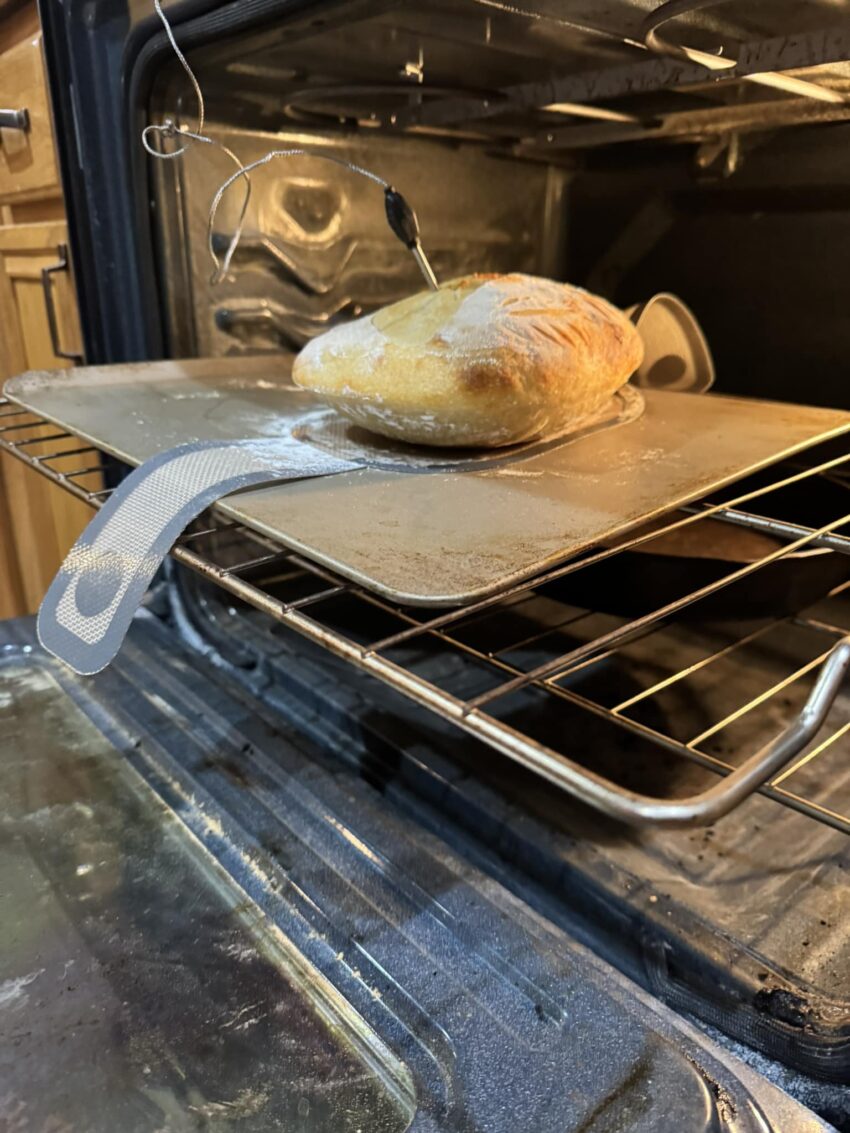
Here’s a straightforward recipe for Sourdough Bread that yields a flavorful, tangy loaf with a lovely chewy texture. If you’re using a starter you already have, this recipe is perfect. If you need to make a starter from scratch, I can guide you through that too!
Sourdough Bread Recipe
Ingredients:
- For the Starter (if you don’t have one already):
- 1/2 cup (60g) whole wheat flour
- 1/2 cup (120g) water (room temperature)
- 1 tablespoon honey or sugar (optional, to boost fermentation)
- For the Dough:
- 1 1/2 cups (360g) active sourdough starter (fed and bubbly)
- 1 1/4 cups (300g) warm water (around 85°F/30°C)
- 3 1/2 cups (420g) all-purpose flour (or a mix of white and whole wheat flour)
- 2 teaspoons salt
- 1 tablespoon olive oil (optional, for slightly softer crust)
Instructions:
1. Make the Sourdough Starter (if needed):
If you don’t have an active starter, follow this method:
- On Day 1, combine 1/2 cup whole wheat flour with 1/2 cup water in a clean jar. Stir until fully combined and cover loosely with a cloth or lid. Let sit at room temperature (around 70°F/21°C).
- On Day 2-7, feed the starter daily by discarding half of the mixture and adding 1/2 cup water and 1/2 cup flour. After 5-7 days, it should be bubbly, tangy, and double in size after each feeding. This means it’s ready to use.
2. Mix the Dough:
- In a large mixing bowl, combine 1 1/2 cups of your active starter with 1 1/4 cups of warm water. Stir to combine.
- Add the flour, one cup at a time, until the dough starts to come together.
- Sprinkle the salt over the dough, and if using, add the olive oil. Mix until it forms a sticky, shaggy dough.
3. Knead the Dough:
- Turn the dough onto a lightly floured surface and knead for about 8-10 minutes, or until it’s smooth and elastic. You can also use a stand mixer with a dough hook for this process.
- The dough should be soft but not too sticky. If it’s too sticky, add a bit more flour, but be careful not to add too much.
4. Bulk Fermentation:
- Transfer the dough into a clean, lightly oiled bowl. Cover with a damp cloth or plastic wrap and let it rise at room temperature for 4-6 hours. The dough should double in size.
- Every hour, perform a stretch and fold (gently stretch the dough and fold it over itself). Repeat this process 2-3 times during the first 2-3 hours. This helps develop the gluten and improves the bread’s texture.
5. Shape the Dough:
- Once the dough has doubled, gently deflate it and turn it onto a floured surface.
- Shape the dough into a round or oval loaf by folding the edges into the center and gently rolling it to create tension on the surface.
6. Proof the Dough (Second Rise):
- Place the shaped dough into a well-floured proofing basket or bowl lined with a clean kitchen towel. Cover loosely and let it rise for 2-3 hours at room temperature, or for a deeper flavor, refrigerate it overnight for 12-16 hours.
- If you’re proofing at room temperature, the dough should be puffed and slightly jiggly when gently pressed.
7. Preheat the Oven:
- Place a Dutch oven (or any oven-safe pot with a lid) in the oven and preheat to 475°F (245°C) for at least 30 minutes.
8. Score the Dough:
- When your dough is ready, carefully flip it onto a piece of parchment paper. Use a sharp knife or razor blade to score the top with a few shallow cuts, which allows the dough to expand as it bakes.
9. Bake the Bread:
- Carefully remove the preheated Dutch oven from the oven. Using the parchment paper, lift the dough and place it into the pot.
- Cover with the lid and bake for 25 minutes.
- After 25 minutes, remove the lid and continue baking for another 20-25 minutes, until the bread is golden brown and has a hollow sound when tapped on the bottom.
- The internal temperature should be around 200°F (93°C).
10. Cool the Bread:
- Let the bread cool completely on a wire rack before slicing. This allows the crumb to set, and you’ll get the best texture.
Enjoy:
- Slice the sourdough bread and enjoy it with butter, cheese, or as part of your favorite sandwich!
Tips for Success:
- Starter health: Make sure your starter is active before using it. You can test it by floating a small spoonful of starter in a glass of water; if it floats, it’s ready.
- Humidity: If your kitchen is very dry, you might want to create a slightly more humid environment by covering your dough with a damp towel or using a Dutch oven with the lid on to trap steam.
- Storage: Homemade sourdough can last for several days at room temperature or up to a week if stored in a paper bag. For longer storage, you can freeze slices for up to 3 months.
Making sourdough bread is a rewarding process! Do you have a sourdough starter, or is this your first time trying it out?