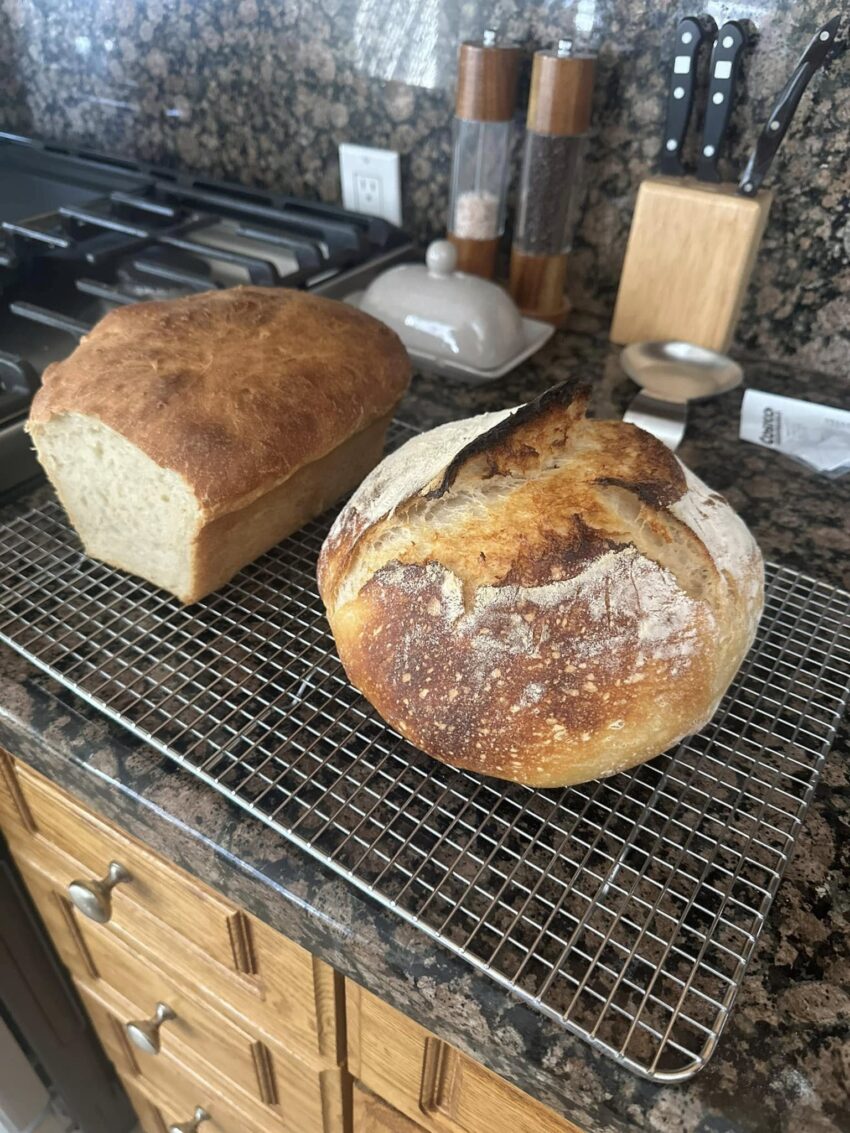
Long-fermented sourdough bread is a fantastic way to enhance the flavor, texture, and digestibility of the bread. The longer fermentation period allows for more complex flavors to develop while also breaking down some of the gluten, making it easier on the stomach. This method typically involves a cold fermentation process, allowing the dough to rise slowly over a longer period (usually 12-24 hours). Here’s how to make it:
Long Fermented Sourdough Bread Recipe
Ingredients:
- For the Sourdough Starter (if you don’t have one already):
- 1/2 cup (60g) whole wheat flour
- 1/2 cup (120g) water (room temperature)
- 1 tablespoon honey or sugar (optional)
- For the Dough:
- 1 1/2 cups (360g) active sourdough starter (fed and bubbly)
- 1 1/4 cups (300g) warm water (around 85°F/30°C)
- 3 1/2 cups (420g) all-purpose flour (or a mix of white and whole wheat flour)
- 2 teaspoons salt
- 1 tablespoon olive oil (optional, for a softer crust)
Instructions:
1. Make the Sourdough Starter (if needed):
If you don’t have a starter yet, you’ll need to create one:
- Day 1: Combine 1/2 cup whole wheat flour and 1/2 cup water in a clean jar. Stir to combine and cover loosely with a cloth or lid. Leave it at room temperature for 24 hours.
- Days 2-7: Each day, discard half of the mixture and feed it with 1/2 cup of water and 1/2 cup of flour. After 5-7 days, your starter should be bubbly, tangy, and double in size after each feeding.
Once your starter is ready, you can proceed with the bread recipe!
2. Mix the Dough:
- In a large mixing bowl, combine 1 1/2 cups of your active sourdough starter with 1 1/4 cups of warm water. Stir well to combine.
- Add the flour in batches, mixing as you go. Once most of the flour is incorporated, add 2 teaspoons salt and olive oil (if using). Stir until the dough comes together into a sticky mass.
3. Knead the Dough:
- Transfer the dough onto a lightly floured surface and knead for about 8-10 minutes until the dough becomes smooth and elastic. If you prefer, you can use the stretch and fold technique instead of kneading:
- Every 30 minutes, gently stretch and fold the dough in the bowl to develop the gluten. Do this for the first 2-3 hours of the fermentation. Stretch the dough, fold it over itself, and turn the bowl.
4. Bulk Fermentation (Long Fermentation):
- After kneading (or folding), cover the dough with a damp towel or plastic wrap and let it rise at room temperature for 2-4 hours.
- Cold Fermentation: After the initial rise, place the dough in the fridge to ferment for an additional 12-24 hours. The long fermentation will allow the flavors to deepen and the dough to develop more tangy notes.
- Note: During this time, you can perform a few more stretch and folds every few hours if you wish to strengthen the dough.
5. Shape the Dough:
- After the long fermentation period, remove the dough from the fridge. Gently deflate it and transfer it to a lightly floured surface.
- Shape the dough into a round or oval loaf, tucking the edges underneath to create tension on the surface. You want the dough to have a smooth surface but not over-handle it.
6. Proof the Dough (Second Rise):
- Place the shaped dough into a well-floured proofing basket or bowl lined with a clean towel.
- Let it rise for about 2-3 hours at room temperature, or you can refrigerate it overnight (12-16 hours) for an even longer fermentation and deeper flavor.
7. Preheat the Oven:
- Place a Dutch oven or a heavy pot with a lid inside your oven and preheat it to 475°F (245°C) for at least 30 minutes. This preheating will help the bread bake with a crisp crust.
8. Score the Dough:
- Once the dough is fully proofed, carefully flip it out onto a piece of parchment paper. Using a sharp knife or razor blade, score the top of the dough in a cross or any design you prefer. Scoring helps the bread expand as it bakes.
9. Bake the Bread:
- Carefully remove the preheated Dutch oven from the oven. Lift the dough using the parchment paper and place it into the pot.
- Cover the pot with the lid and bake for 25 minutes.
- After 25 minutes, remove the lid and continue baking for another 20-25 minutes, until the bread is a deep golden-brown color, with a crispy crust.
- The internal temperature of the bread should reach around 200°F (93°C) when fully baked.
10. Cool the Bread:
- Let the bread cool completely on a wire rack before slicing. Allowing it to cool properly will help set the crumb and enhance the texture.
Enjoy:
- Your long-fermented sourdough is now ready to be enjoyed! Slice it up and savor the tangy, complex flavor and chewy texture. It’s perfect for toast, sandwiches, or served with butter.
Tips for Long Fermentation:
- Starter health: Make sure your starter is active and bubbly before you begin the process. If it’s not doubling in size within a few hours after a feeding, it may need more time or additional feedings.
- Fermentation time: The longer you let the dough ferment (up to 24 hours in the fridge), the more flavor the bread will develop. But don’t worry if you don’t have 24 hours—the bread will still taste fantastic with a 12-hour fermentation!
- Baking stone or Dutch oven: A preheated Dutch oven is ideal for getting the best crust on your sourdough. You can also use a baking stone if you prefer.
Long fermentation truly enhances the flavor and texture of your sourdough, giving it a more complex, tangy profile. Let me know how it turns out, and feel free to ask if you have any questions along the way!