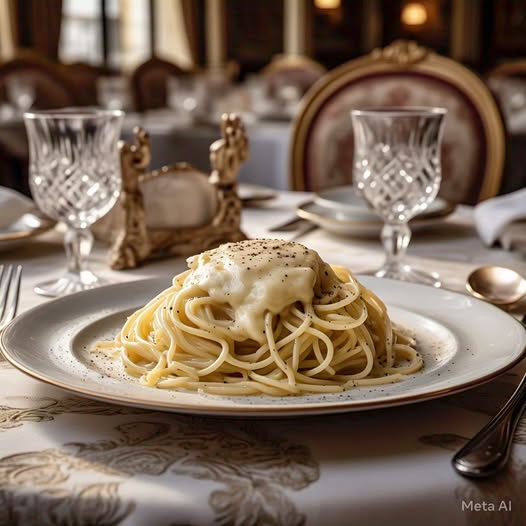
Spaghetti Cacio e Pepe is a simple yet flavorful Italian pasta dish that combines just a few basic ingredients: pasta, Pecorino Romano cheese, black pepper, and pasta water. It’s creamy, cheesy, and has a delightful peppery kick. Here’s a classic recipe to make this delicious dish at home.
Spaghetti Cacio e Pepe Recipe
Ingredients (Serves 2-3):
- 200g (7 oz) spaghetti or other long pasta (such as tonnarelli)
- 1 cup (about 80g) finely grated Pecorino Romano cheese
- 2 teaspoons freshly cracked black pepper (adjust to taste)
- 1 tablespoon olive oil or unsalted butter (optional)
- Salt, to taste (for pasta water)
- 1 cup reserved pasta water (from cooking the pasta)
Instructions:
1. Cook the Pasta:
- Bring a large pot of salted water to a boil. Add the spaghetti and cook until al dente according to the package instructions (about 8-10 minutes).
- Before draining, reserve about 1 cup of pasta water. This starchy water will help make the sauce creamy.
2. Toast the Black Pepper:
- While the pasta is cooking, heat a large skillet over medium heat. Add the freshly cracked black pepper to the dry skillet and toast it for about 1-2 minutes, stirring occasionally. This step enhances the flavor of the pepper.
3. Make the Sauce:
- Once the pepper is toasted, add a splash of olive oil or a small knob of unsalted butter to the skillet (optional for extra richness).
- Add a bit of the reserved pasta water to the skillet with the black pepper. Stir to combine and create a peppery broth.
4. Combine Pasta and Sauce:
- Once the pasta is cooked, transfer it directly into the skillet with the black pepper mixture (using tongs or a slotted spoon). If the skillet is not big enough, you can also return the pasta to the pot.
- Gradually add some of the reserved pasta water to help the pasta mix with the pepper sauce and create a smooth consistency. Toss the pasta in the skillet to coat the spaghetti with the peppery water.
5. Add the Pecorino Cheese:
- Remove the skillet from the heat and quickly add the grated Pecorino Romano cheese, tossing vigorously to combine. The heat from the pasta and the reserved pasta water will help the cheese melt and form a creamy, velvety sauce. If the sauce is too thick, add a little more pasta water to achieve the desired consistency.
6. Adjust Seasoning and Serve:
- Taste the pasta and adjust the seasoning with more black pepper or salt if needed.
- Serve immediately, garnished with additional Pecorino Romano cheese and freshly cracked black pepper, if desired.
Tips for the Perfect Cacio e Pepe:
- Pasta Water: The key to this dish is the starchy pasta water. It helps to create a smooth, creamy sauce when combined with the cheese.
- Cheese: Pecorino Romano is traditional, but you can also mix in some Parmesan if you prefer a milder flavor. Just make sure the cheese is finely grated to melt quickly and evenly.
- Pasta Type: Tonnarelli or bucatini are also great choices for this dish, but spaghetti works just as well.
- Don’t Overheat: When adding the cheese, be sure to remove the skillet from the heat to prevent the cheese from becoming gritty or clumpy.
Serving Suggestion:
Spaghetti Cacio e Pepe is best served as a standalone dish, but you can pair it with a simple salad, like arugula with lemon and olive oil, or a glass of white wine, like Pinot Grigio.
Enjoy your Spaghetti Cacio e Pepe—a rich and comforting Italian classic with just the right balance of creamy, cheesy, and peppery flavors!