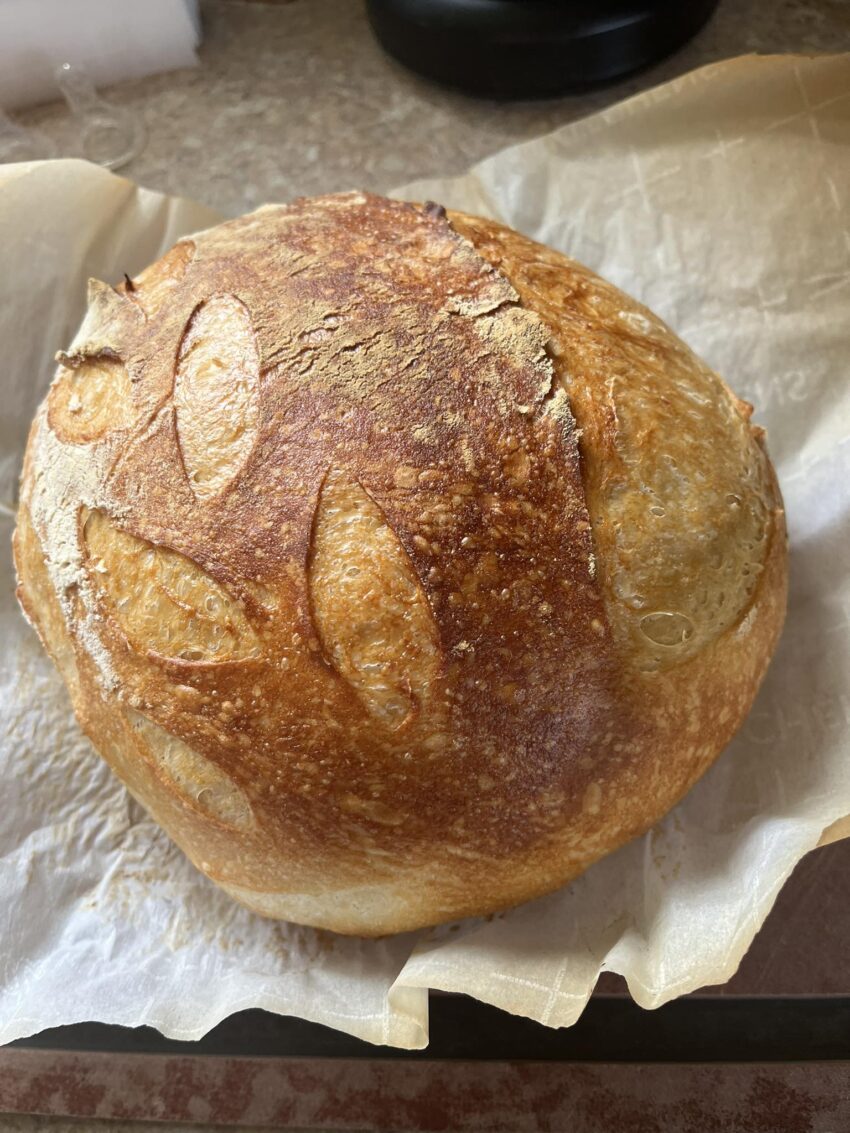
🍞 Long Fermented Sourdough Bread
Ingredients:
-
1 cup (240g) active sourdough starter (fed and bubbly)
-
1 1/4 cups (300g) water, at room temperature
-
3 1/2 cups (440g) bread flour (plus extra for dusting)
-
1 1/2 tsp salt
Instructions:
-
Mix the dough:
-
In a large mixing bowl, combine the sourdough starter and water. Stir until the starter is dissolved into the water.
-
Gradually add the flour, mixing with a spoon or your hands until no dry flour remains.
-
Sprinkle in the salt and mix until fully incorporated.
-
-
Autolyse (rest phase):
-
Let the dough rest, uncovered, for 30 minutes. This step allows the flour to hydrate and makes the dough easier to work with.
-
-
Knead the dough:
-
After the autolyse, perform a series of stretch and folds. To do this, gently pull one side of the dough up and fold it over toward the center. Rotate the bowl and repeat for 4-6 folds.
-
Cover the dough and let it rest for 30 minutes, then repeat the stretch and fold process 2 more times, for a total of 3 sets of folds over 1 1/2 hours.
-
-
Bulk fermentation:
-
Cover the dough and let it rise at room temperature for 12–16 hours. This can be done overnight. The dough should double in size and be slightly bubbly when ready.
-
For a more tangy flavor, you can leave it at room temperature for the full 16 hours.
-
-
Shape the dough:
-
After the bulk fermentation, turn the dough onto a lightly floured surface.
-
Gently shape the dough into a round boule or oval shape, being careful not to deflate it too much. If you want a more structured loaf, you can shape it into a tight ball or use a proofing basket.
-
-
Second rise (proofing):
-
Let the shaped dough rest for another 2-3 hours at room temperature, or until it has noticeably puffed up. Alternatively, you can refrigerate it overnight for a more developed flavor.
-
-
Preheat your oven:
-
About 30 minutes before you’re ready to bake, preheat your oven to 450°F (230°C). If you have a Dutch oven or baking cloche, place it in the oven to preheat as well. This helps create steam, which gives the bread its signature crispy crust.
-
-
Score the dough:
-
Once the dough is ready, use a sharp razor or bread lame to score the top in a cross or pattern of your choice. This allows the bread to expand properly while baking.
-
-
Bake the bread:
-
If using a Dutch oven, carefully transfer the dough into the preheated pot, cover with the lid, and bake for 20 minutes.
-
After 20 minutes, remove the lid and bake for an additional 20–25 minutes, or until the bread has a deep golden-brown crust.
-
-
Cool:
-
Allow the bread to cool completely on a wire rack before slicing to avoid a gummy texture.
-
✅ Tips & Variations:
-
Flour mix: You can substitute part of the bread flour with whole wheat or rye flour for added flavor and nutrition.
-
Overnight rise: For a milder flavor, refrigerate the dough after mixing, and let it ferment in the fridge for 12–24 hours instead of on the counter.
-
Sourdough starter: Make sure your starter is active and bubbly before using it to ensure a strong rise and flavor.
-
Oven setup: If you don’t have a Dutch oven, you can bake the bread on a baking stone or sheet, but place a tray of water in the oven to create steam.
This method results in a tangy, flavorful bread with a crisp crust and chewy crumb. If you need a gluten-free version or want more tips on how to maintain a sourdough starter, feel free to ask!