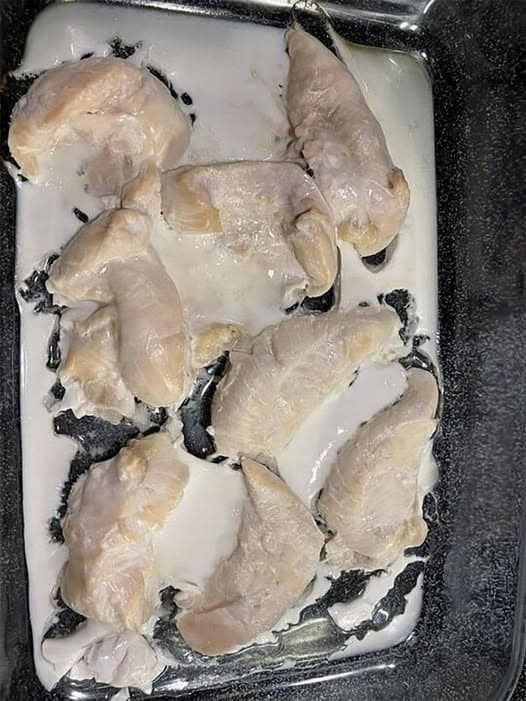
The mysterious white goo that sometimes appears on cooked chicken is often a cause for concern, but it’s actually pretty harmless and can be explained by the chicken’s proteins. Here’s a breakdown of why it happens:
Why Does White Goo Appear on Cooked Chicken?
-
Protein and Water Release:
- Chicken, especially lean cuts like chicken breast, contains a lot of water. When it’s cooked, the heat causes the proteins (mainly myosin and actin) in the muscle fibers to contract, which forces out some of the water.
- This water, combined with the proteins, forms a milky, white substance. The goo is essentially protein and moisture that has been released during cooking.
-
Cooked Too Fast:
- If chicken is cooked at too high a temperature, the proteins contract too quickly, forcing out more water and creating a higher concentration of the white goo.
- This is often seen when cooking methods like grilling or pan-frying are used at very high heat.
-
Chicken’s Natural Juices:
- Sometimes, especially with young or plump chicken, there’s more moisture content, and as the chicken cooks, the protein fibers break down and release a milky, viscous liquid.
- It can also occur in processed or injected chicken, which sometimes contains added water, salt, or other ingredients. The added liquid can be forced out during cooking.
-
The Difference Between White Goo and Overcooking:
- While white goo is generally harmless, it’s different from overcooking your chicken, which can make it dry, rubbery, or even stringy. If the goo is excessively present or if the chicken is tough and dry, it might be a sign of overcooking.
Is It Safe to Eat?
Yes! The white goo is made up of water and proteins and is perfectly safe to eat. If you don’t like the appearance or texture, you can simply remove it with a spoon or blot it away with a paper towel. The goo doesn’t affect the safety or flavor of the chicken.
How to Minimize the White Goo:
- Cook at lower temperatures: Cooking chicken slowly over medium heat allows the proteins to release moisture more gradually, reducing the amount of white goo.
- Use a thermometer: Cooking chicken to the correct internal temperature (165°F or 75°C) ensures it’s cooked through but not overdone.
- Avoid high heat: Especially when grilling or pan-frying, if you sear the chicken too quickly, it can force out more water. Try to cook it more slowly to preserve the texture and moisture.
Conclusion:
The white goo is simply an expression of the chicken’s moisture and proteins being released during cooking. It’s perfectly natural and safe, though it can be minimized by cooking at a moderate heat and ensuring you’re not overcooking the chicken. Would you like tips on cooking chicken perfectly, or any other culinary mysteries?